There is a statistic, well-documented in the sexual-health literature, that almost everyone in this industry knows and almost no one in casual conversation says out loud. Between seventy and seventy-five percent of women, in surveys done across at least four countries and three decades, report that they have never reliably reached orgasm through penetration alone.
The figure is not new. The most widely cited modern reference is a 2021 systematic review published in the National Library of Medicine; the underlying numbers go back to the Hite Report in the 1970s, and they have been remarkably stable ever since. What has changed is the framing. For most of the last fifty years, this number was treated as a problem of psychology, technique, or — in the worst readings — character.
It is none of those things. It is, almost entirely, a problem of angle — and, as we'll explain, of material.
This guide is the editor's attempt to gather, in one place, the answers to the questions that get asked privately, googled at midnight, and rarely answered in one piece anywhere on the open internet. What the G-spot actually is. Where to find it. Why most penetrative tools miss it. Why temperature matters. What to do when nothing seems to work. And — at the end — the small handful of objects that, in our reading and reviewing, do the work the rest of the category claims to.
What the G-spot actually is (and isn't)
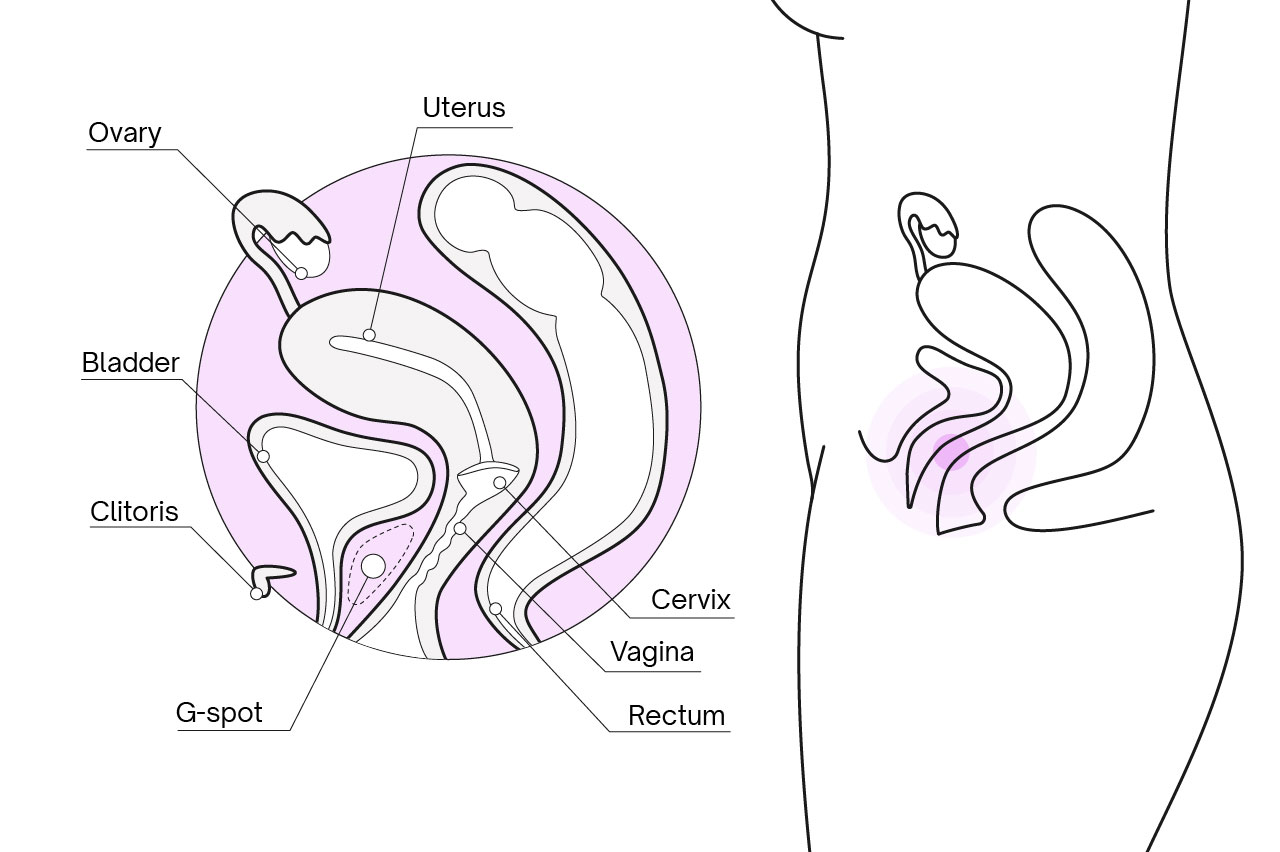
The "G-spot" is a useful piece of shorthand and a slightly misleading one. It is not, strictly, a spot. It is a region — a couple of square centimetres of erectile tissue on the front wall of the vagina, roughly one to three inches inside the entrance, at what clock-faces would describe as the 12 o'clock position with the woman lying on her back.
Anatomically, it appears to be the back surface of the internal clitoral structure, reachable from inside. The clitoris is, contrary to most diagrams from the 1990s, a large, multi-armed organ; only its visible "head" is external. The rest extends into the body and wraps around the urethra. The G-spot region is the part of that internal structure you can reach by curving forward, toward the navel.
For decades there was a credible academic argument that the G-spot did not exist as a discrete entity. That argument has, in the modern literature, been gently retired. The current consensus — captured in the 2021 systematic review and in the consumer-press summaries at Healthline and Flo Health — is that the G-spot is a real, locatable region of erectile tissue, and that it is part of the larger internal clitoral network rather than an unrelated structure.
The reason most penetrative toys miss it is straightforward. They are built to slide along the back wall — the path of least resistance — not to apply pressure to the front. They are also, almost universally, soft.
Soft and back-wall is fine. It is not, however, the geometry the front wall is asking for.
How to find it (with fingers, first)
Before reaching for any object, the simplest, most diagnostic way to locate the region is by hand. We recommend this not from prudishness — there is plenty in this guide about objects — but because the geometry has to be felt before it can be reproduced.
Set aside fifteen unhurried minutes. The body needs to be relaxed and meaningfully aroused before any internal contact; the G-spot region is erectile tissue, which means it is locatable only when blood is flowing to it. Trying to find it cold is like trying to find a muscle you have not yet flexed.
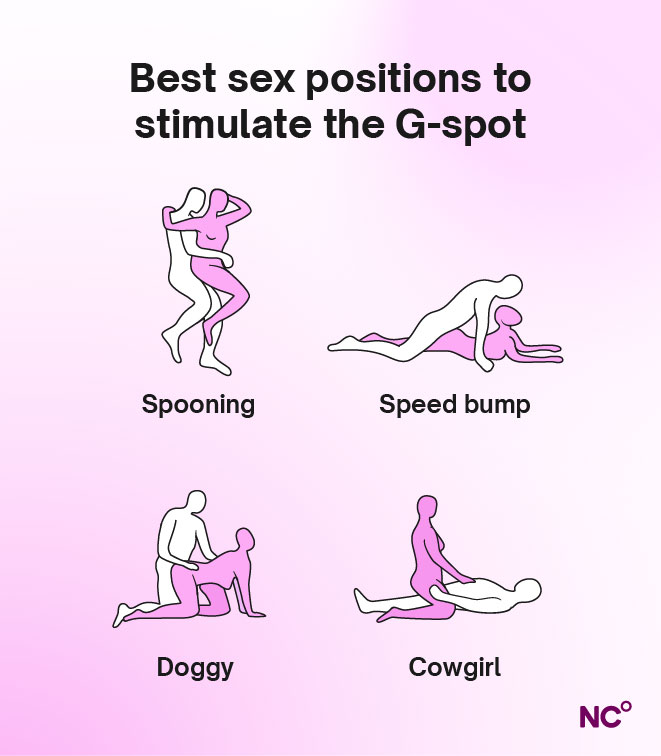
- Position. Lying on the back, knees bent and slightly apart, is the easiest first orientation. The clock-face shorthand — 12 o'clock at the navel, 6 o'clock at the spine — works only from this position.
- Insert one or two fingers, palm up. Not deeply. Two to three inches is the floor of where the action begins; past that and you are past the region.
- Curve your fingers toward your navel. The motion is closer to a "come here" gesture than a thrust. You are looking, with the pads of the fingers, for an area on the front wall that feels textured — slightly ribbed, slightly spongy, almost like a small patch of corduroy beneath smooth fabric.
- Apply gentle, sustained pressure. The G-spot region responds to weight rather than to friction. Sliding past it is not the same as pressing into it. Hold steady; the response, if it comes, is not instant.
- If the first sensation feels like the urge to urinate, pause. This is a normal reaction; the G-spot region sits adjacent to the urethra and pressing against it engages similar nerve pathways. Empty the bladder beforehand and the sensation usually settles within a minute or two.
Two things to know, before you move beyond fingers. The first is that fingers, even skilled ones, often struggle: they are not heavy enough, the wrist position is awkward to sustain, and the pressure required is firmer than most people expect. The second is that the response is, almost universally, slower than what an external clitoral orgasm trains you to expect. Ten to fifteen minutes is the typical floor for a first response. Most published guides describe a "warming up" period; they are accurate.
If, after this hand-only diagnostic, you have located something but not reached anything resembling release, you are not failing. You are simply running into the limits of what a finger can do. That is what objects are for.
"Perfect for people with pain on penetration — it's very gentle, the glass is an incredible material for our membranes, body-safe, the temperature games are top-notch, ideal for the G-spot."
Célia M., Verified Buyer · biird.co · Translated from French
The 12 O'Clock Method
The 12 O'Clock Method is the simplest version of what sex educators have been teaching for forty years. The clock-face framing has been adopted across consumer health publications precisely because it gives a memorable orientation. Lying on your back, the G-spot region is on the front vaginal wall, toward the navel — that is, at the 12 o'clock position. Everything else is a variation on getting an object to that position and applying sustained pressure to it.
The method has three parts:
One. The body should be relaxed and aroused before any internal contact. (Same circulatory reason as above.)
Two. The angle of approach matters more than the depth. Insertion should curve forward — toward the navel — once two to three inches inside. Depth past three inches is not where the action is; the front-wall region is shallow.
Three. The pressure required is firmer than most people expect. Soft is not what's being asked for here. The G-spot region responds to weight — to having something deliberately pressed against it.
The first two parts are technique. The third part is a tool problem.
The tools, in order of who they're for
For G-spot stimulation specifically, the right tool depends less on price and more on body and preference. The honest survey of options:
Fingers
Free, available, and the right starting point for diagnostic purposes — but limited by sustained-pressure fatigue and wrist geometry. If you are partnered, a partner's fingers (with the partner sitting between your knees, palm facing your navel) are usually more comfortable than your own.
Vibrators (clitoral or wand)
Excellent for external stimulation. Largely not the right tool for sustained internal G-spot pressure unless they are specifically curved and weighted for the region. Most aren't. The Magic Wand and similar are wonderful objects; they are not, in this specific use case, the answer.
Silicone G-spot dildos
The largest and most marketed category. The shape is usually right; the material is the issue. Silicone takes on body temperature almost immediately and gives under sustained pressure, which means the front wall has to stay pressed in order to register the contact. It is a workable choice, particularly for buyers earlier in their exploration who prefer a softer feel. It is rarely, in our reading, the best one.
Glass G-spot pieces
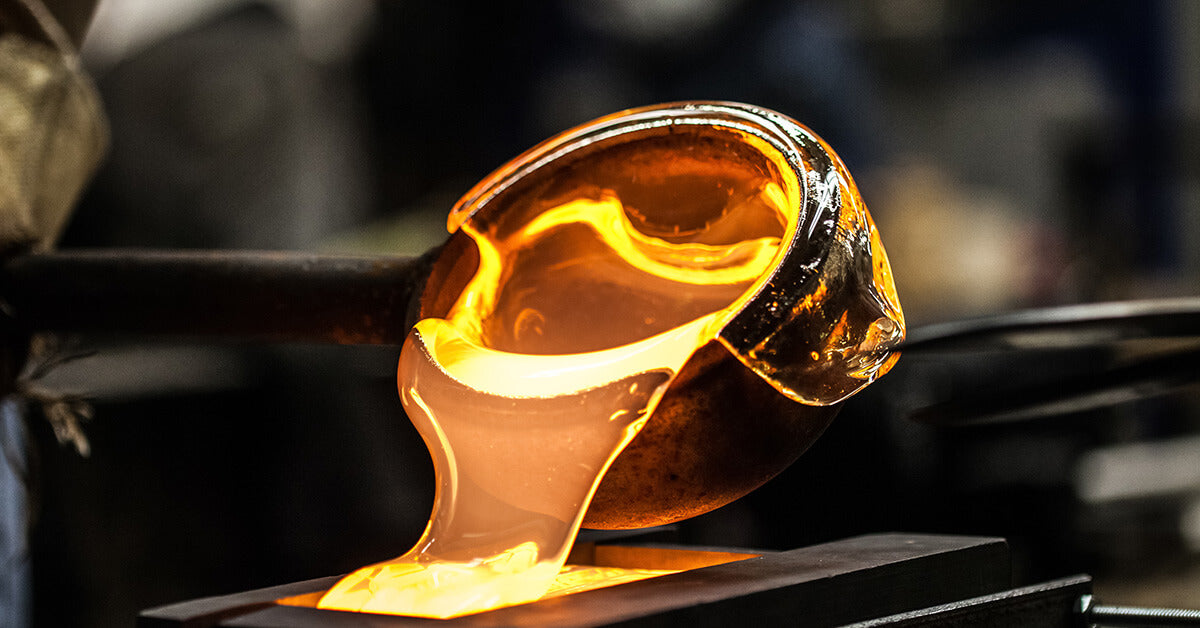
The category most often skipped because it sounds intimidating and most often recommended once it has been tried. Hand-blown borosilicate glass — the same family used in laboratory equipment, in Pyrex, and in the better French press carafes — is non-porous, body-safe, lubricant-agnostic, and uniquely temperature-responsive. The specific reason it works for G-spot stimulation is geometric: glass holds its shape under pressure, holds temperature for the length of a session, and weighs enough for gravity to do the work that a wrist would otherwise have to do.
If you want the long version of why glass tends to win for this specific use case, our editor's twelve-piece comparative review goes into detail. The short version follows below.
Stainless steel
The other rigid material in the category. Steel is heavier than glass and holds temperature similarly well; some users find it clinical, others find it the right answer. It tends to live at a higher price point and is, in our experience, the niche-second-piece rather than a first-piece for most readers.
Why glass works for the front wall, specifically
If you have spent any meaningful amount of money on penetrative toys in the last decade, the toys you own are almost certainly silicone. Silicone is medical-grade, flexible, body-faithful, and — here is the part nobody mentions — it does precisely what the front vaginal wall does not need it to do.
Silicone is soft. Silicone gives. Silicone takes on the temperature of your body almost immediately and stays there, which means it cannot transmit pressure as a sustained, foreign sensation. Pressed against the front wall, a silicone toy bends back toward the path of least resistance — the back wall — and slides along it. It is not a flaw in the design. It is a flaw in the assumption that softness is universally desirable.
The front wall is asking for the opposite of softness. It is asking for: weight, firmness, and a curve that doesn't collapse when met with resistance. There are exactly two materials in the consumer market that meet that brief. One is stainless steel. The other is borosilicate glass.
Steel is heavy in a way that some find clinical. Glass — and we will come to a specific glass — is the version most women prefer.
The temperature thing, explained
The reason every premium pelvic-floor and G-spot tool is glass or steel is that the front-wall region is markedly more sensitive to temperature differential than the back wall is. This is well-documented in the urology and gynaecology literature; it is also, anecdotally, the single most underrated detail in the consumer category.
What this means in practice: cooling glass for ten minutes (in cool water, never ice) and warming it under the tap for two are both well-documented techniques in the sex-education literature. They are not marketing.
The cold lasts, in glass, for almost the entire session. Silicone cannot do this. Silicone takes on whatever temperature your body has and stays there, sympathetically, like a co-worker who agrees with everything you say. Glass disagrees with you for a while. Glass keeps its own counsel. Glass, in this context, is — and we cannot believe we are writing this in 2026 — a more interesting personality.
The mechanics of doing it safely:
- Cool by running cold tap water over the piece, or submerging in a glass of cool (not iced) water in the fridge for 10 minutes. Test the temperature on the inside of your forearm before any other contact. Aim for the temperature of a swimming pool in May — briskly cool. Not painful.
- Warm by running it under warm tap water for two minutes. Body temperature is fine; warmer-than-body is the point.
- Never use the freezer or microwave. Manufacturer instructions are explicit on this for safety reasons; thermal shock can fracture even borosilicate.
The temperature response on the front wall registers as a clean, defined sensation — quite different from the diffuse warmth of a body-temperature silicone piece. Most women, on first try, describe the first cooled-glass session as "different in a way I had no language for." That is, in our reading of the verified-review aggregate, the most common single reaction in the category.

When the response isn't there yet
The single most common message we receive from readers on this topic is some version of: I tried what you said, and nothing happened. We want to address this honestly.
The G-spot region's response is genuinely slower than the external clitoris's, in most women, by an order of magnitude. If the external clitoris responds in seconds, the G-spot region responds in minutes. Ten to fifteen minutes is the floor; some women report response times closer to twenty. If you have given up after four or five minutes — which most people do, the first time — you have not given the region time to engage.
Beyond patience, the recurring troubleshooting items in the consumer-press literature:
- Increase the pressure, not the speed. The instinct, when something isn't working, is to move faster. The right move is usually to press harder.
- Adjust the angle slightly. The 12 o'clock position is approximate. If you are lying on your back and the curve is pointing dead-vertical and nothing is happening, try angling the object slightly toward 11 or 1 o'clock — the front-wall region varies by anatomy.
- Engage the external clitoris simultaneously. The G-spot is part of the internal clitoral network; external clitoral stimulation increases blood flow to the entire structure. A combination is, for most women, more effective than either alone.
- Try a different time of day. The pelvic-floor's responsiveness varies meaningfully across the menstrual cycle for many women; the same body that is unresponsive on cycle day 4 may be quite responsive on cycle day 14.
- Empty the bladder first. Already mentioned in the finger section, repeated here because it remains the most common single fix.
- If the urge-to-urinate sensation is overwhelming, you may be very close. The line between G-spot response and urinary urgency is, neurologically, narrow. For some women it crosses into squirting; for others it doesn't. Both responses are normal; neither is required.
"This is the first toy that amazed me. It's glass, but it feels so soft and it takes your body temperature quickly. The packaging, immaculate. The product, immaculate."
Laura · Verified Buyer · biird.co
Verbatim, from buyers
For balance, the verbatim reviews below are from biird.co and from the larger online retailers carrying glass G-spot pieces — including the verified-buyer designation and any translation notes. We have copy-pasted, not paraphrased.
Best toy I have ever owned
"This is the first toy that amazed me. It's glass, but it feels so soft and it takes your body temperature quickly. The packaging, immaculate. The product, immaculate."
Incredible material for our membranes
"Perfect for people with pain on penetration — it's very gentle, the glass is an incredible material for our membranes, body-safe, the temperature games are top-notch, ideal for the G-spot, beyond the fact that it's sublime."
Different intensities for any position
"All of the different intensities let you choose the mood for any occasion. The size and shape make it easy to use in basically any position."
Specific properties: temperature, weight, shape
"I liked the specific properties of Kalii — temperature, weight, shape. Very enjoyable."
Surprised at every stage
"I was so surprised by the speed and discretion. All I have to say is: PERFECT."
Works for him, too
"My first one in glass. So beautiful. The unboxing — wonderful size, good weight. The rigidity makes a real impression. I recommend even for men."
Questions readers tend to ask
Is the G-spot real, or a myth?
I've tried and tried, and it doesn't seem to be there. Am I missing something?
What about squirting? Is that a separate thing?
Why does the 12 o'clock position matter? Aren't there many positions?
Will glass break inside the body?
Why does temperature matter? Isn't that gimmicky?
Is this for solo use or partnered use?
What if I don't get on with it?
Tools we'd reach for
The honest editor's-pick section. We have read every verified-buyer review across the major glass G-spot pieces on the market — there is a much longer write-up in our twelve-piece comparative review — and across price tiers, two pieces stand out. Both are made by the same Dutch design house, biird, and both are available online through their direct retailer. We list them in the order we'd recommend them by use case, not by price.
Kalii
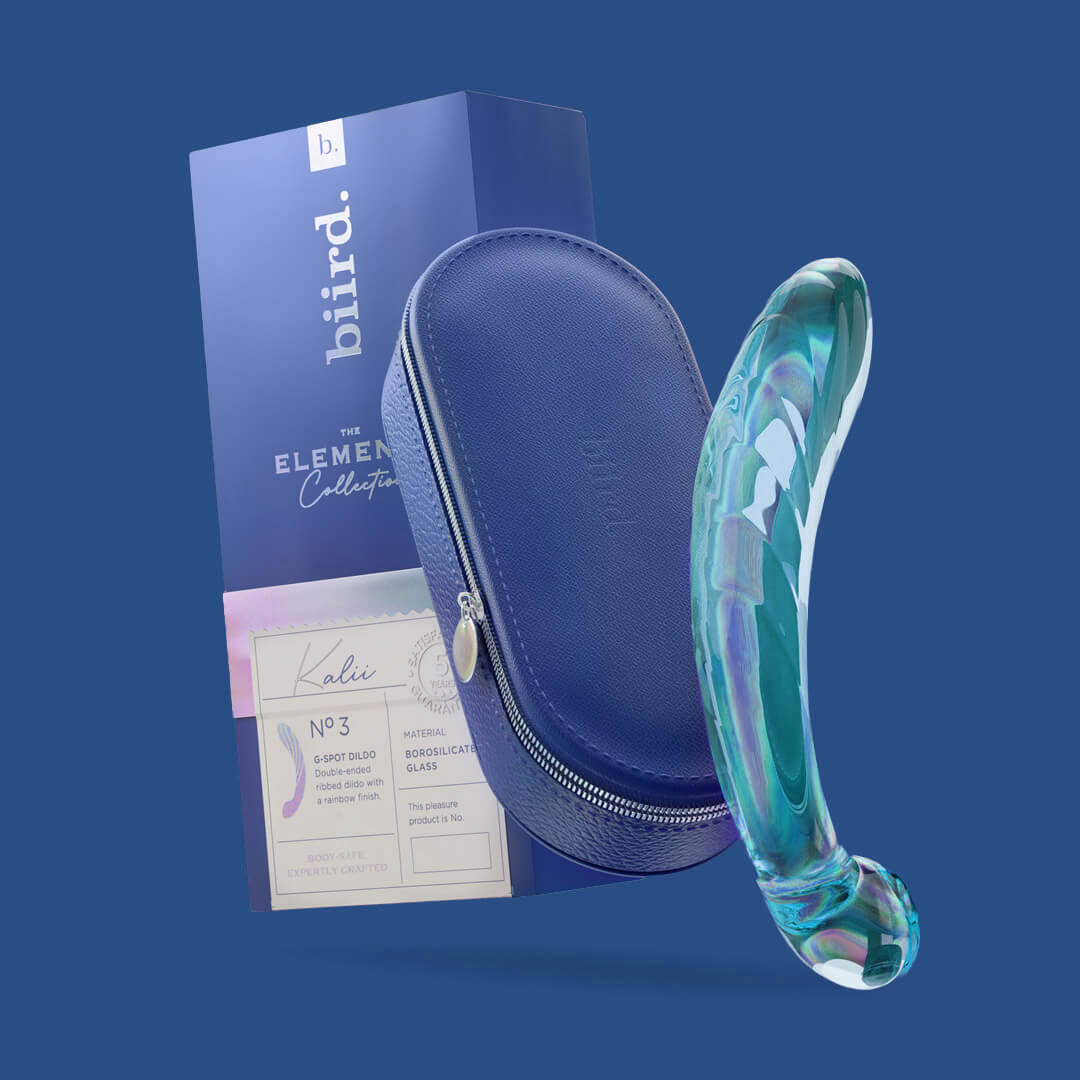
The hand-blown glass piece — 7", 1 lb, 15° curve calibrated to the front-wall region. The only piece in its tier that ships with a vegan-leather zip case included. consistent five-star praise from verified buyers online. The pick if you have done the finger diagnostic, located the region, and are ready for the right object for it.
View on heybiird.com →
Gii
biird's vibrating G-spot piece, in their signature mint silicone. Different design philosophy from the Kalii — softer, vibration-driven, easier first piece for buyers earlier in their exploration. The pick if you are coming from a clitoral-vibrator background and want to add internal stimulation without a hard-material learning curve. 5-year guarantee, body-safe silicone, USB rechargeable.
View biird collection →A note on the choice between them: if you are unsure, our editor's preference for first-time G-spot exploration is the Kalii — but only if you have done the finger diagnostic and confirmed the region responds. If the response has been hesitant or inconsistent, the Gii's combination of softer material and vibration tends to be the gentler entry point. Many readers eventually own both.
P.S. The Kalii has sold out twice in the last twelve months; the most recent restock arrived in late March and, at the time of this writing, stock is healthy but not abundant. If the listing shows the piece as available when you click through, the supply chain is in a good week.
Related from Lustre Journal
- I Threw Out 5 of My 6 Sex Toys After 30 Days With One Piece of Glass — the confessional version of the argument we make above.
- I Bought My Wife a $300 Lelo. She Hated It. Here's What I Bought Next. — a husband's account of getting the gift wrong, then right.
Reader Comments · 5
I want to flag, as a pelvic-floor PT, that the part about "ten to fifteen minutes for first response" is the single most overlooked thing I tell patients. Most women give up at four or five. Iris, this is the cleanest piece I've read on the topic — sending to my Tuesday clinic.
The temperature thing was the part I didn't believe. I tried the cool-water version on a recommendation and it changed what I thought my body could do. I am 41 and have spent more on toys than I want to admit. This was the one.
Question — does the curve direction matter when using one-handed? I keep mixing up which way is "toward the navel" in practice.
Joanna — easiest mnemonic: hold the piece with the curve pointing the same direction as your fingers when you make a "come here" gesture. That's the curve direction you want during use. The Kalii's handle is shaped to make this orientation intuitive once you've held it once.
Coming from the vibrator-only camp, I went with the Gii first because it sounded gentler — agree it was the right call. Switched to the Kalii three months in and they do entirely different jobs. Both stay in the drawer.
I have read approximately fourteen articles about the G-spot in the last two years and this is the only one that explained why it has eluded me. The geometry framing is the part nobody else does. Thank you.