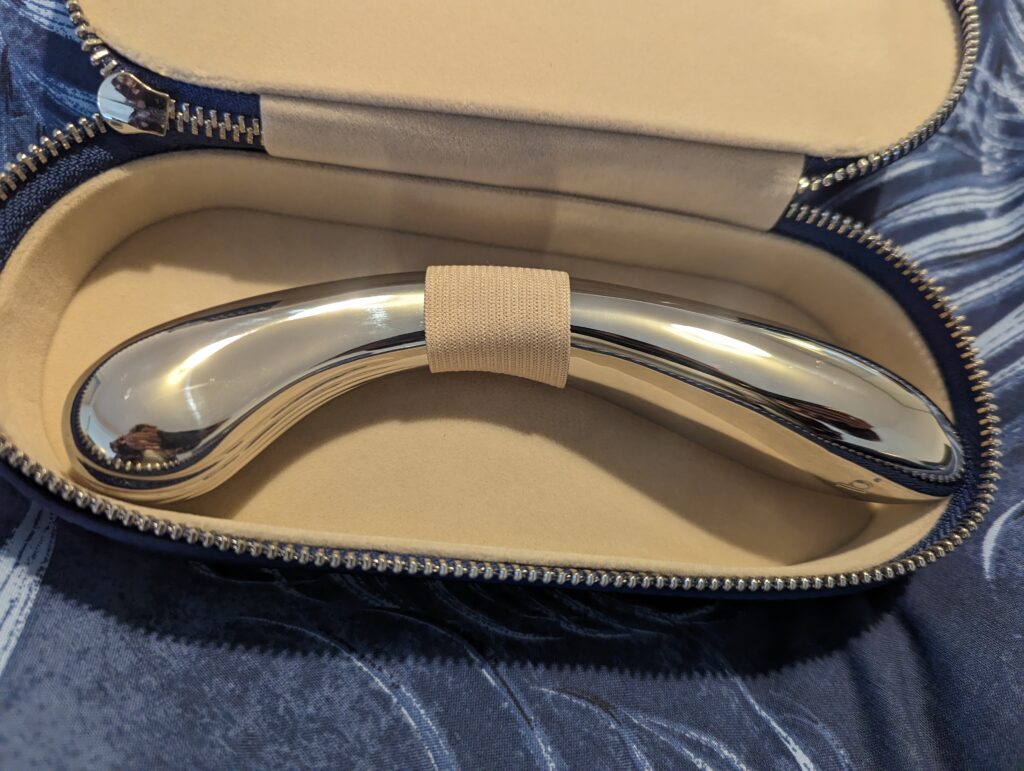
For my wife's thirty-eighth birthday, last October, I bought her a Lelo. The specific Lelo is not important except to say that it cost three hundred dollars, came in deep matte rose, was reviewed favourably by every major women's-wellness publication I could think to search, and was, according to its product page, the "design-led answer" to a question I had not, until that point, fully understood I was supposed to be asking.
I had been, in my own estimation, careful. I had read four roundup articles. I had clicked through to the brand's site, watched the unboxing video, noted the soft-touch silicone and the medical-grade certifications. I had paid for expedited shipping so it would arrive on the right day. I had wrapped it. I had — and this is the part I want to be precise about — done what I considered to be my homework.
For the next ten weeks, the Lelo sat in our bedside drawer. She would tell me, when I asked, that she loved it. I believed her, the way you believe someone you love when they tell you something they want to be true.
The conversation that finally produced the truth happened in late December, at our kitchen table, over a half-finished bottle of red wine. She had been quiet for most of dinner. I had asked her, in the way one asks a careful question, whether something was wrong. She set down her glass, looked at me with what I can only describe as a kind of exhausted fondness, and said:
"I should have told you sooner. It was a thoughtful gift. But I hated it. Not the brand. The thing. It is the wrong object." — My wife, December 2025
I did not, at first, understand what she meant by "the wrong object." I asked her to explain. She did, slowly, with several false starts. She said she had tried to use it three or four times. She said the silicone felt warm and pliable in a way that was, she said, "indistinguishable from skin, and that's not what I want from a sex toy." She said the vibration was the part she had hoped would do the work, and the vibration was not, in fact, the part that needed to do the work. She said — and this is the part that lodged in my mind — that she had spent fifteen years owning toys that were essentially the same toy in different colours, and that the Lelo had simply been the most expensive version of that same toy.
I asked, more carefully, whether she meant she didn't enjoy that kind of object at all.
She said no. She said she did enjoy something. She had just never owned the thing she enjoyed. She wasn't sure she could describe it. But she knew, and this was the line that started this entire essay, that "softness wasn't the answer."
I am, in my professional life, a person who solves problems by reading. I went to my office, I closed the door, and I started.
The research rabbit hole
What I learned, over the course of approximately fourteen hours of reading spread across three nights, can be summarised as follows.
The penetrative sex-toy industry, for the last fifteen years, has converged on a single material — medical-grade silicone — for reasons that are mostly about manufacturing: silicone is cheap to mould, body-safe, easy to colour, and sells well across every demographic. There is, in the consumer-press category, almost no honest discussion of why silicone is the dominant material; it is simply assumed to be the right answer, the way one assumes a kitchen knife should have a wooden handle.
What there is, if you read deeply enough — and I read very deeply — is a parallel literature. Pelvic-floor physiotherapists. Sex educators with clinical training. A small number of glass-and-steel artisans. A 2021 systematic review on the urology side. A surprisingly serious Refinery29 piece from 2018 that I do not believe my wife had ever read. The argument across all of them is the same: for a specific subset of stimulation — front-wall, internal, what the consumer category awkwardly calls "G-spot" — the right material is not silicone. It is glass.
The reason, as best I understood it after eleven o'clock on a Tuesday, is geometric. Front-wall stimulation responds to weight and to sustained pressure rather than to vibration. Silicone, being soft, gives under pressure; glass, being rigid, transmits it. Glass also holds temperature in a way silicone cannot, and the literature on temperature differential — "warming under tap water" or "cooling in a glass of fridge water for ten minutes" — is, as far as I can tell, the most underrated single detail in the entire consumer category.
I had been, I realised by midnight on the third night, looking at the wrong shelf in the wrong aisle.
"Until now I'd only had silicone toys, which never fully convinced me. Then I discovered Kalii — and it is muy caliente." — Mélanie B., Verified Buyer · biird.co
Finding biird, and finding the Kalii
The pull-quote above is not from my wife. It is from a woman named Mélanie B., a verified buyer who left the review on biird.co. I came across it on the fourth night of my research, eight tabs deep, and I read it twice. I screenshotted it. I forwarded the screenshot to no one, because what would I have done with a forwarded screenshot of a stranger's review of a sex toy. But I read it twice.
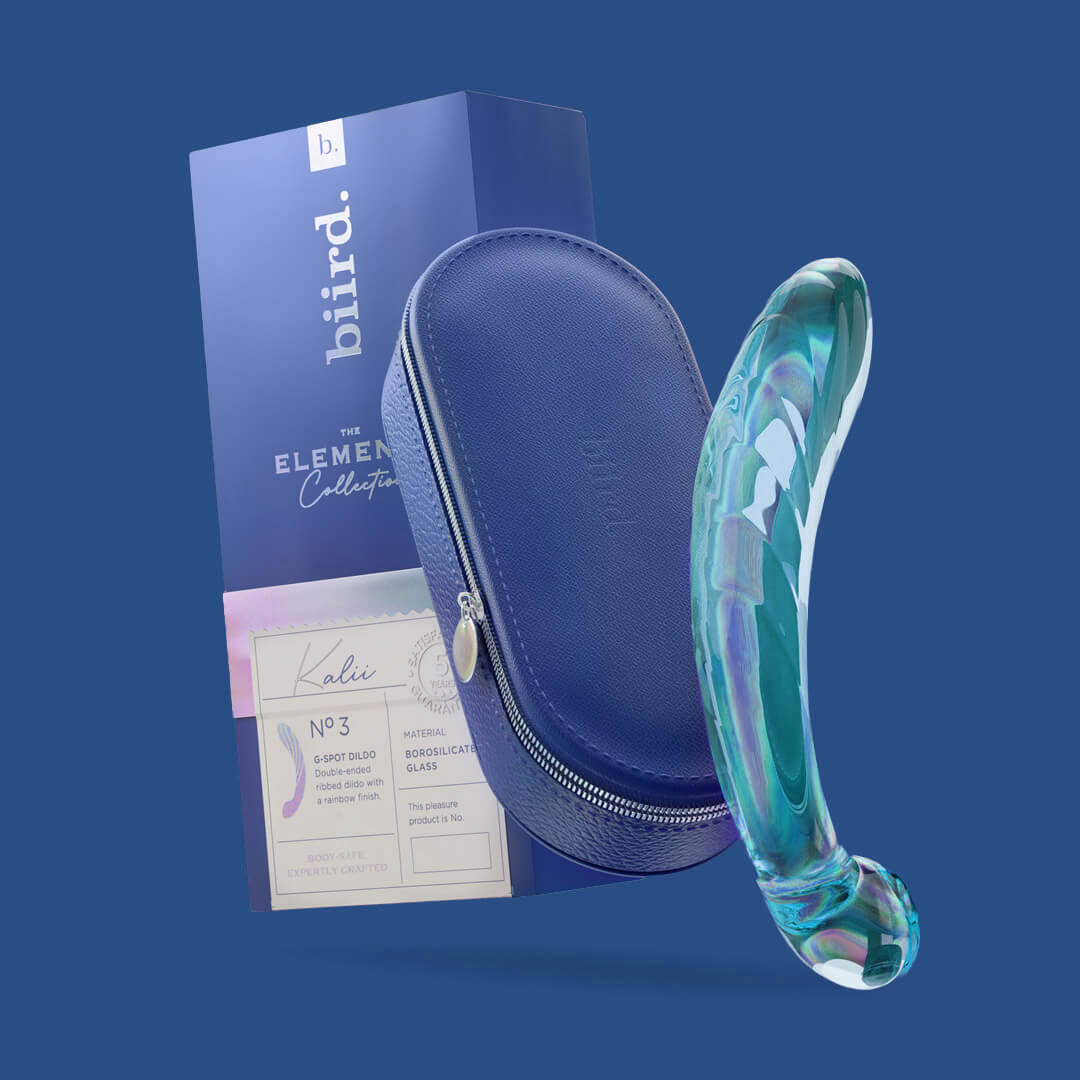
biird is a Dutch design house, founded in Amsterdam in 2020 by a woman named Andrea Rey. Their website looks like a Scandinavian kitchen-objects company. Their flagship piece, the Kalii, is hand-blown borosilicate glass — seven inches, one pound, with what they describe as a "fifteen-degree calibrated curve" — and ships in a vegan-leather zip case that, in the photographs, looked closer to a jewellery roll than packaging. The piece itself is rainbow purple. The rainbow, the brand explained on a long product-page paragraph I read twice, is a property of the glass refraction itself, not a coating. It does not wear off.
It cost, on its US retail listing, one hundred and twenty-nine dollars on sale, down from one sixty-nine. There were, as of the night I bought it, a wall of verified five-star reviews. The recurring words in those reviews — I read approximately thirty before placing the order — were weight, temperature, surprise, and beautiful. There was also a comment about the case, from a woman named Laura, that I found persuasive: "The packaging, immaculate. The product, immaculate."
The brand, almost incidentally, had also made the news in 2021 for filing a public petition against Big Tech's censorship of female-pleasure content on Meta-owned platforms. I did not buy the Kalii because of the petition. I bought it because of the reviews. But I noticed the petition, and I want to be honest that it shifted, by some amount I cannot precisely measure, my willingness to give the brand the benefit of the doubt.
I ordered the Kalii on a Wednesday night in early January, paid for standard shipping, and selected the option to add a handwritten note. The note said: "You were right. This is a different shelf. With love — J."
What happened when it arrived
The package arrived on a Tuesday, in a discreet brown outer box, while I was at the office. My wife sent me a photograph of the closed package on the kitchen counter at 3:47 p.m., with no caption. I sent back a single thumbs-up. I came home an hour and a half early.
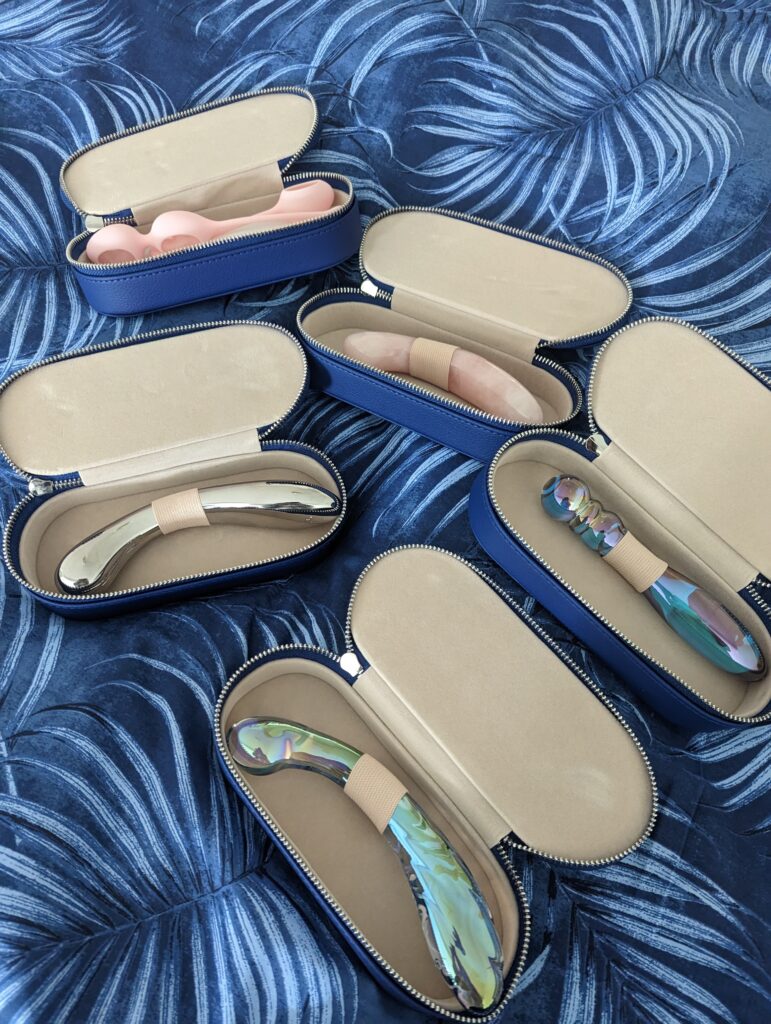
She had, by then, opened it. The vegan-leather case was on the kitchen island, unzipped. She was holding the Kalii in her right hand and the case in her left, and she was looking at the case, not at the piece, with an expression I had not seen on her face in approximately four years. It was the expression of someone for whom an entirely unexpected object has just landed in their hands.
What she said, in the order she said it, was:
"It's heavier than I expected. Why didn't anyone tell me weight was a thing?
The case alone is — Jonas, this case is the kind of thing I would buy as a gift for someone else.
I have to wash it. I have to think about this. I have to — I'm sorry, I have to read the instructions." — My wife, January 2026
She did not, that night, talk about it again. The next morning, over coffee, she said that she had tried it the previous evening — she had put it in a glass of cool water in the fridge for ten minutes first, on the manufacturer's instruction — and that it had been, in her words, "a different sensation than I had a vocabulary for, and I'm going to need a few days to think about that."
I did not press for more.
The thirty-day verdict
What I observed, over the next thirty days, was the following. The Lelo did not return to the drawer. It went, in fact, to a charity-donation pile, after a thorough sterilisation; my wife had read somewhere that a particular shelter accepted unused medical-grade silicone for reissue, and she did not want to throw away a three-hundred-dollar object out of stubbornness. She kept the Magic Wand. The Lelo was the only thing that left.
The Kalii lives, currently, on a small ceramic dish on her side of the bed. It does not require hiding. A friend of ours, in the kitchen on a Saturday afternoon last month, asked what it was. My wife said, evenly, "a paperweight from a Dutch design brand." This was not technically a lie. The friend did not press.
What I will say, on her behalf because she has read three drafts of this and asked me to add it: the temperature thing is real, the weight is real, and the difference between a tool that is meant to vibrate at you and a tool that is meant to be pressed against you is, in her words, "not a difference of degree but of category." She has used the words "muy caliente" twice — both times, I am almost certain, as a deliberate echo of Mélanie B.'s review, which she found and read on her own about two weeks after the Kalii arrived.
I have been married to her for eleven years. I have not seen her find a new object she liked this much in a decade.
What I would tell another husband
This essay is, mostly, the version of the conversation I would have with another man in my position, if any of us actually had this conversation. We don't. Sex toys for women, in the husband-buys-for-wife economy, are dominated almost entirely by what the marketing department of the major brands has decided to put on the front page of search results. That marketing tilts, overwhelmingly, toward silicone, vibration, and the assumption that more expensive equals more effective.
Here is the only thing I would tell another husband:
- Price is not the proxy. The $300 Lelo was the wrong gift. The $129 Kalii was the right one. The price band does not predict the answer; the material and the geometry do.
- Material is the proxy. Silicone is the default and almost always the wrong default for the use case I had not, before this, understood I was buying for. Glass — specifically hand-blown borosilicate — is the answer for the kind of stimulation the major silicone manufacturers have not optimised for.
- The case matters. I was sceptical of this when I read the reviews. I was wrong. The first thing my wife reacted to was the case. The piece itself was the second thing. Buy the version that ships with a serious case included. (For the Kalii, the case is included; biird otherwise sells it separately at £26.)
- Listen, eventually, to what she has actually been telling you. The line that began the entire research project was "softness wasn't the answer." She had been telling me this, in some form, for ten weeks. I had not been hearing it. The research process was, in some sense, the first time I had genuinely listened.
If you are reading this essay because your wife has, for any number of birthdays, been polite about the gifts you have given her in this category — try the Kalii. One hundred and twenty-nine dollars. Free, discreet shipping. Vegan-leather case included. Five-year guarantee. Thirty-day return policy that I have, gratefully, not had to test.
It worked.
"All of the different intensities let you choose the mood for any occasion. The size and shape make it easy to use in basically any position."
Leia · Verified Buyer
If you'd like the second opinions
I will admit it took me, on top of the fourteen hours of reading, a further two days to actually push the buy button. What got me there was a small wall of verbatim reviews on the US retail listing, copy-pasted below in case it shortcuts the same hesitation for someone else.
Best toy I have ever owned
"This is the first toy that amazed me. It's glass, but it feels so soft and it takes your body temperature quickly. The packaging, immaculate. The product, immaculate."
Never convinced by silicone — until this
"I had only had silicone toys, which never fully convinced me. Then I discovered Kalii — and it is muy caliente."
Different intensities for any position
"All of the different intensities let you choose the mood for any occasion. The size and shape make it easy to use in basically any position."
Specific properties: temperature, weight, shape
"I liked the specific properties of Kalii — temperature, weight, shape. Very enjoyable."
Surprised at every stage
"I was so surprised by the speed and discretion. All I have to say is: PERFECT."
Works for him, too
"My first one in glass. So beautiful. The unboxing — wonderful size, good weight. The rigidity makes a real impression. I recommend even for men."
Across consistent five-star praise from verified buyers — which is to say, more verified reviews than the Lelo I had bought, by a wide margin — the recurring vocabulary is exactly what my wife described: weight, temperature, surprise, beautiful, easy.
P.S. The Kalii has sold out twice at its US retail listing in the last twelve months — both times, my wife mentioned it to me with what felt like protective alarm. The current restock is healthy but not abundant. If the listing shows it as available when you click through, the supply chain is in a good week.
Related from Lustre Journal
- Everything You Need to Know About the G-Spot — the anatomy and material-science research that finally made everything click for me.
- Twelve Glass G-Spot Pieces, Scored — if you want to see why the Kalii won the comparative review I read on night three.
Reader Comments · 5
Sending this to my brother. We have a saying in our family — "the wrong shelf in the wrong aisle" — and now I have an essay to attach to it. Jonas, the line "softness wasn't the answer" is the part I will be stealing, with attribution.
Bought this for my wife three weeks ago after reading. She had a similar reaction to yours — first thing she touched was the case. Second thing she said was "this is heavier than I expected." Same script, different couple. Thanks for writing this.
Speaking on the wife's behalf in a similar setup: the part where she made you wait three drafts before you could submit this is the part I most identify with.
Leah — accurate. She said the first draft was "earnest in a way that would embarrass us both." The current version is the version she allowed.
For the husbands reading this and panicking about anniversaries: the case really is the part she will mention first. I bought my wife the Kalii for our tenth in February. She has shown the case to two friends. She has shown the piece to no one. The marketing department of biird, whoever they are, understands their audience.
The Refinery29 piece you cited is the same article that started me down this path two years ago. Your wife sounds wonderful. Tell her, from a stranger on the internet, that "the wrong object" is now in my next book of essays.